
Bridging the Clinical Gap: Connecting Community and Acute Care with a Maternity EPR
The Divide Between Community and Hospital Settings
Maternity care is inherently mobile. An expectant mother’s journey rarely happens in a single location. It spans community clinics, home visits, and eventually, the acute hospital ward. Managing this constant movement requires a highly responsive digital infrastructure. Historically, clinical teams have relied on physical notes transported by the patient or fragmented digital systems that do not communicate with one another.
Navigating care between community settings and central maternity units can sometimes create gaps in shared information. Without instant access to the central database or immediate visibility of home visit notes, clinical teams simply have to work harder to ensure all details are aligned. It also places an extra burden on expectant mothers, who are left responsible for carrying their physical notes to every single appointment and ensuring those vital records are never forgotten or misplaced. A modern Maternity EPR exists to connect these environments, ensuring a smooth and coordinated experience for both staff and families.
Eliminating Information Silos on the Front Line
For a Trust to operate efficiently, medical information must flow without restriction. Unfortunately, many maternity units still operate within technological silos. A midwife conducting a routine check in a patient’s home might record vital data on paper, fully intending to upload it to the hospital system later that afternoon. This administrative delay means the central maternity patient records are temporarily outdated. If that same patient presents at an emergency triage clinic an hour later, the attending obstetrician is forced to work with incomplete information.
A dedicated Maternity EPR like MiRecord eliminates these silos completely. By providing a unified platform that stretches from the community clinic to the consultant’s office, every authorised professional looks at the exact same data. This single source of truth prevents duplicated tests, reduces conflicting medical advice, and ensures that clinical care pathways are followed exactly as intended by the lead medical team.
Real-Time Synchronisation for Community Midwives
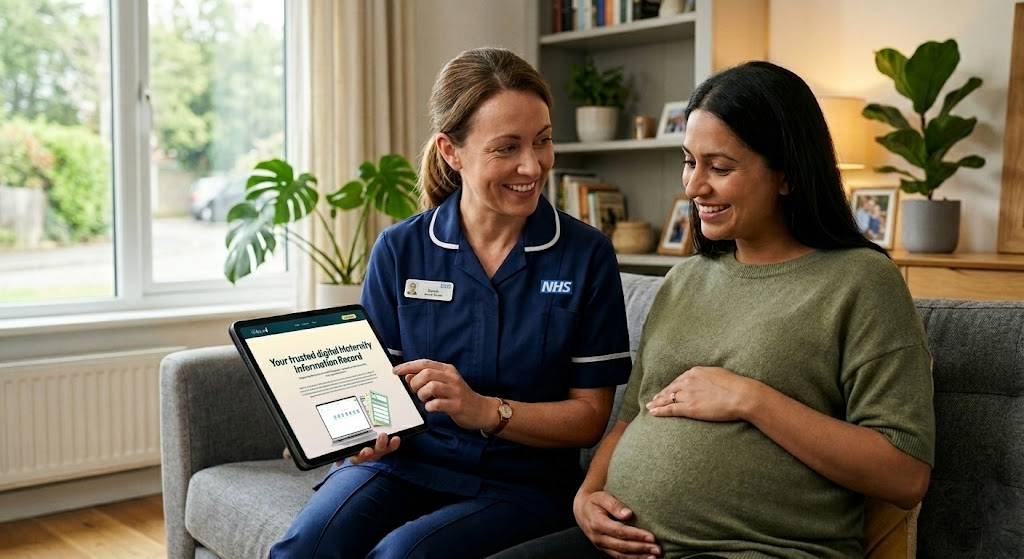
Community midwives carry immense responsibility, often working solo in unpredictable environments. They require tools that support their autonomy while keeping them firmly tethered to the broader clinical team. A highly functional Maternity EPR is designed specifically with mobile working in mind. Midwives can securely access and update maternity patient records directly from a tablet or mobile device while sitting in a patient’s living room.
This real-time synchronisation represents a fundamental shift in operational safety. If a community midwife detects elevated blood pressure and suspects pre-eclampsia, they can log the reading, trigger an automated risk alert, and immediately refer the patient to the acute assessment unit. The hospital team receives the data instantly. They can prepare for the patient’s arrival before she even leaves her home.
Furthermore, robust systems account for the realities of working in varied environments. If a midwife is visiting a patient in a rural location with poor internet connectivity, the software allows for secure offline data entry. The moment the device reconnects to a secure network, the system automatically syncs with the central database. This ensures that no critical data is ever lost or delayed due to infrastructure limitations.
Streamlining Handovers to the Maternity Ward
The transition from community-led antenatal care to hospital-led intrapartum care is a highly critical juncture. When a patient goes into labour and arrives at the maternity unit, clinical staff must digest her entire medical history in a matter of minutes. In traditional setups, this requires quickly scanning through pages of handwritten notes or querying the patient during a highly stressful moment.
A modern Maternity EPR like MiRecord streamlines this handover process completely. The attending team can instantly access a clear, chronological digital history. All risk factors, birth preferences, previous complications, and recent lab results are consolidated into an intuitive dashboard. Clinicians spend less time searching for data and more time focusing directly on the mother and baby. This rapid knowledge transfer is essential for making safe, informed decisions when time is the most valuable resource on the ward.
Enhancing Safety Through Unified Maternity Patient Records
Safety in maternity care is directly tied to the clarity of information. Unified digital records provide a robust safety net that physical notes simply cannot match. With a comprehensive EPR, Trusts benefit from automated clinical pathways. If a patient’s body mass index or age places her in a higher risk category, the system automatically prompts the required specialist referrals and schedules the necessary additional screening appointments.
Handling sensitive health information requires absolute compliance with national data standards. A secure digital system protects patient privacy far better than a physical folder that could be misplaced in a busy clinic waiting room. Strict role-based access controls ensure that only authorised professionals involved in the patient’s direct care can view their medical history. This adherence to strict information governance builds a solid foundation of trust between the hospital and the community it serves.
Integrating Mixed-Channel Communication
While clinical data belongs securely in an EPR, the operational communication that surrounds a pregnancy requires equal attention. Expectant mothers need appointment letters, educational materials, and timely reminders. To prevent administrative staff from returning to manual tasks, a comprehensive digital strategy must connect the clinical record directly to outbound communication tools.
Through integrations with platforms like Harlow Connect+ and secure hybrid mail services, Trusts can automate these vital touchpoints. When a 20-week scan is booked within the Maternity EPR, the system can automatically trigger a secure, branded appointment letter to be printed and posted from a central facility. Alternatively, it can dispatch a secure digital notification directly to the patient. This mixed-channel capability ensures every demographic is reached effectively, reducing missed appointments and freeing ward clerks to manage front-line patient interactions.
Empowering Your Trust’s Digital Future with MiRecord
Managing the flow of data across different care settings does not have to be a constant struggle. Your clinical teams deserve infrastructure that works alongside them, whether they are inside the hospital or out in the community. At Harlow Solutions, we understand the specific, daily pressures of modern midwifery. Our MiRecord platform provides a highly secure, intuitive Maternity EPR designed specifically to bridge the gap between community care and the acute ward.We work closely with your Trust to map your existing pathways, ensuring that our software adapts perfectly to your specific clinical workflows. By securing your digital transition, you guarantee that accurate maternity patient records are always available at the exact point of care. Contact the Harlow Solutions team today to discuss your digital roadmap and discover how MiRecord can support a safer, more connected future for your maternity services.